What is The Eisteddfod?
We as a country are losing the Welsh in our music! Only because our language was slowly declining and now its accelerated slowly for the past two years, this is what the pandemic brought us. Although as a Welsh person, there is hardly people around me that can speak Welsh around Swansea. Now by the Welsh Goverment, they decided that us Welsh people have a higher chance of getting a job in Wales and in other British Countries. I don’t know many Welsh artists or bands, Sŵnami are the only bands that I know to be bringing younger audiences to their Rock genre.
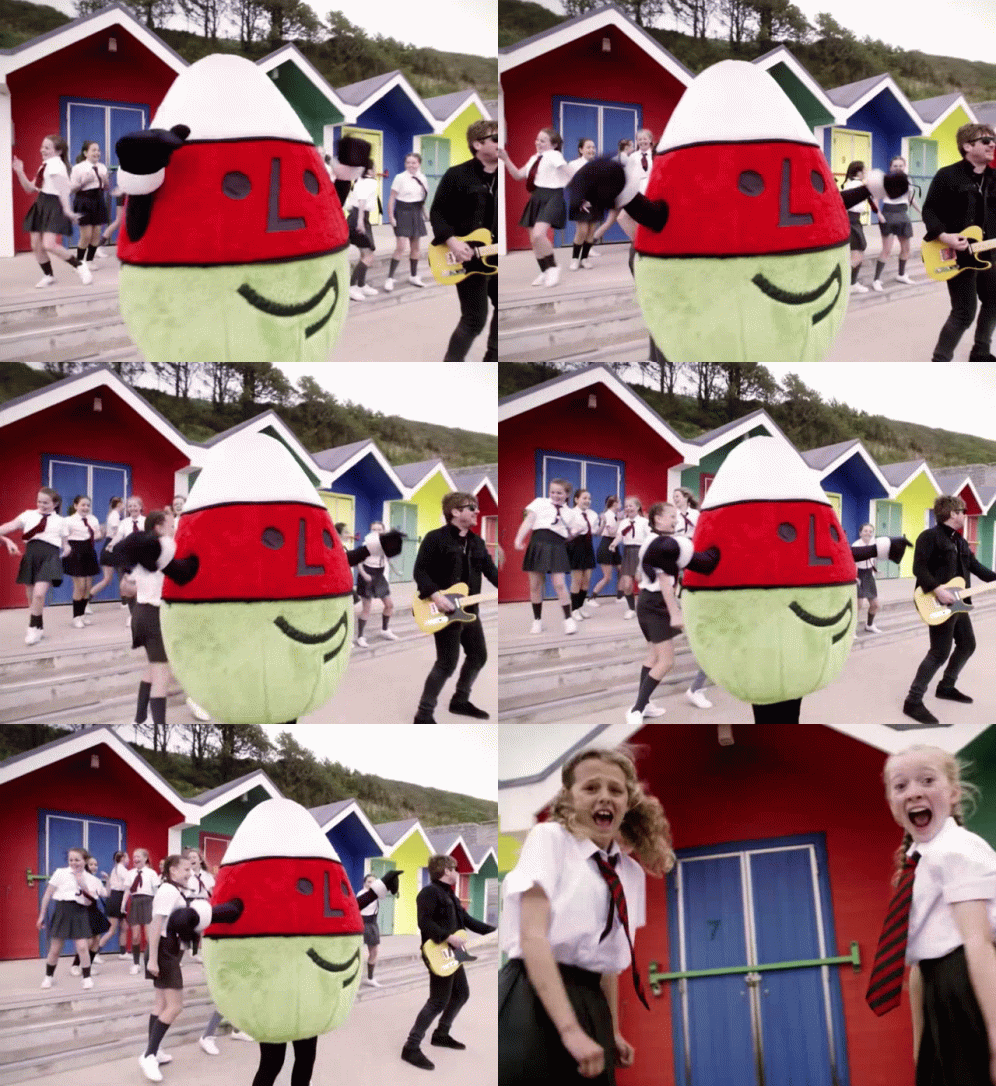
Wales or ‘Cymru’ has been nicknamed “The Land of Song, although I don’t hear much Welsh music and its funded by The Eisteddfod. Now they also have The Urdd, the mascot promotes it. There are so many events and they should be attracting more people! Of course in Cardiff, they have the big Sŵn festival and other culteral events that are dotted around Wales. Cardiff in general hasn’t got many Welsh promoters or Welsh speakers… Which should bring us for me to tell you all about the history! The history of The Eisteddfod.
The history of the Eisteddfod in Wales can be traced back to 1176, with the modern history of the organisation dating back to 1861. The festival has been held every year, other than 1914 and 2020, when the outbreak of the First World War saw it postponed for a year. Its a competition based yearly event has had everyone up and down from Wales competed, from schools to universities. Over 6,000 people compete every year without fail, although the pandemic has hit different in our way of life. The Maes (site) is the central of the festival that grows bigger! The Eisteddfod is the natural showcase for music, dance, visual arts, literature, original perfomances and much more. Encompassing all aspects of the arts and culture in Wales, it is an inclusive and welcoming festival, which attracts thousands of Welsh learners and those who do not speak the language as well as Welsh speakers every year. Translation services are available in the Pavilion and bilingual information is available. We also have a centre for learning Welsh on the Maes. In ways we need to gain more promotion for this event! We should celebrate our culture more and focus on us as ‘The Land of Our Fathers’. Most of Wales’ leading writers, musicians and poets have competed at the Eisteddfod, with many performers appearing on a national stage for the first time during the festival.
 Music In Wales